EALS provides free, practical resources that help interpreters, advocates, educators, and service providers champion meaningful access across healthcare, education, and legal settings.
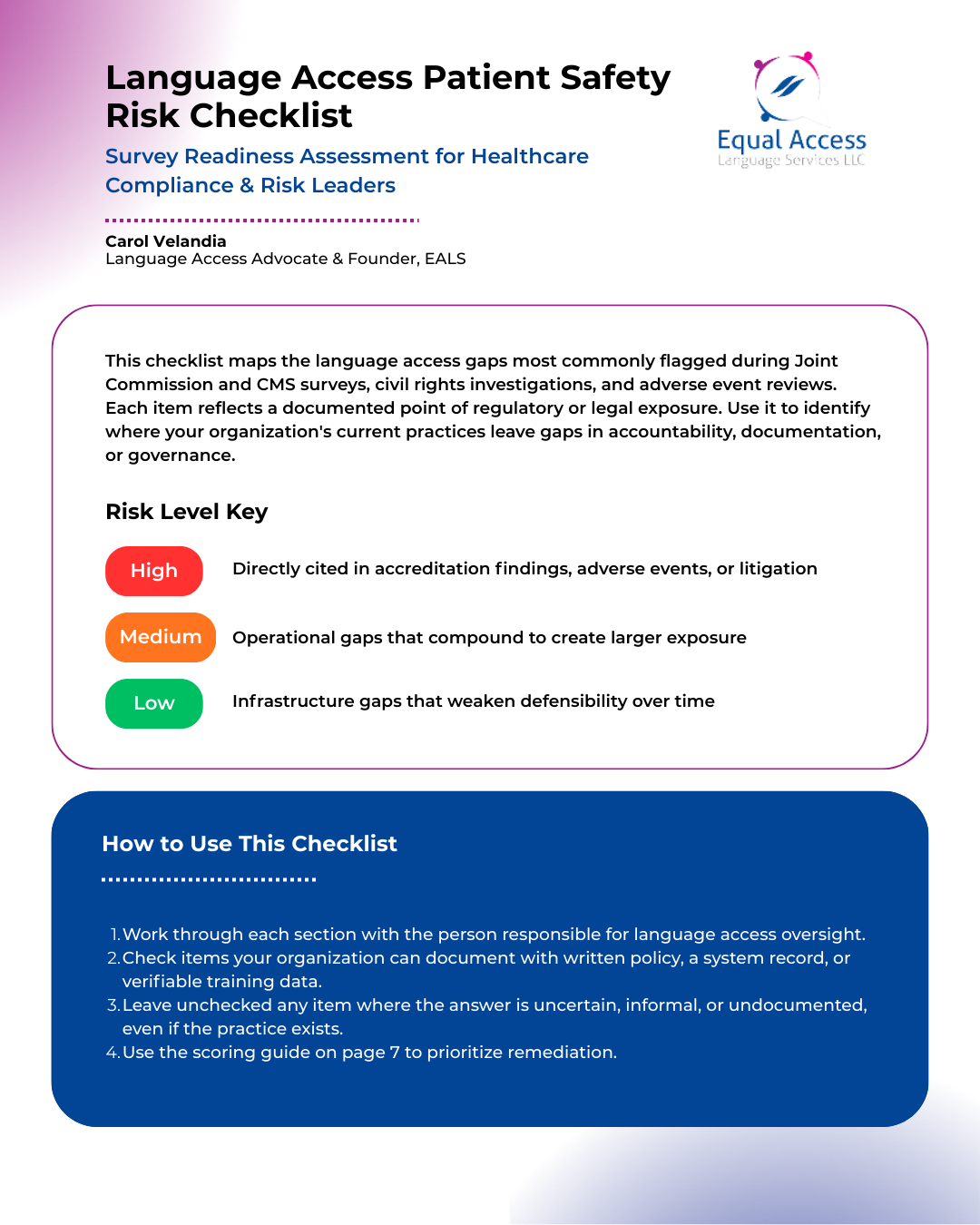
Language Access Patient Safety Risk Checklist
This checklist helps healthcare leaders identify language access gaps that can create patient safety risks, compliance exposure, and survey findings. It walks through key areas such as policy, interpreter qualifications, consent documentation, staff training, and governance. A practical tool for compliance, risk, and quality teams to assess readiness and prioritize improvements before audits or investigations.
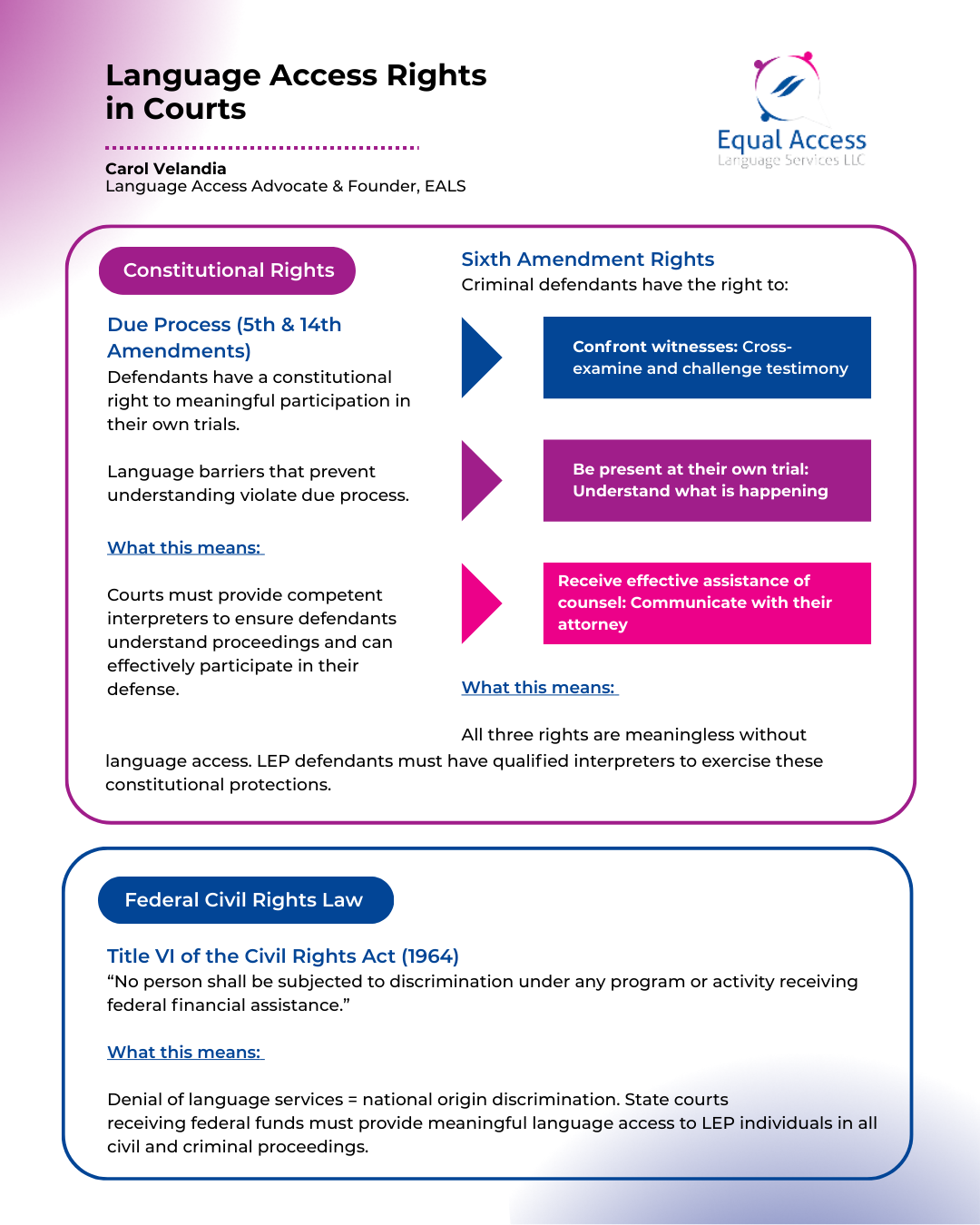
This resource helps court interpreters understand the constitutional and civil rights basis for language access in legal proceedings. It outlines due process and Sixth Amendment protections, relevant federal and state laws, and provides clear advocacy language for use in court. A concise, actionable guide for safeguarding meaningful participation and upholding justice for LEP individuals.
This resource helps healthcare interpreters understand the legal foundations of language access in medical settings. It explains key federal protections, defines what qualifies as a competent interpreter, and offers ready-to-use advocacy phrases for real-world scenarios. A practical reference for interpreters who want to protect patient rights and ensure meaningful access to care.
Language Access in the Arab World – Tourism Industry
This one-pager helps tourism leaders recognize language access as a safety and service issue. It explains how gaps affect visitor experience, emergency communication, and ratings, and offers practical steps to improve readiness. A useful overview for destinations, hotels, and tourism authorities.
Language Access in the Arab World – Healthcare Industry
This one-pager helps healthcare leaders address multilingual risk in Gulf healthcare systems. It outlines where language access affects safety, consent, and accreditation, and provides a simple readiness framework aligned with regional standards. A starting point for hospitals serving diverse patient populations.
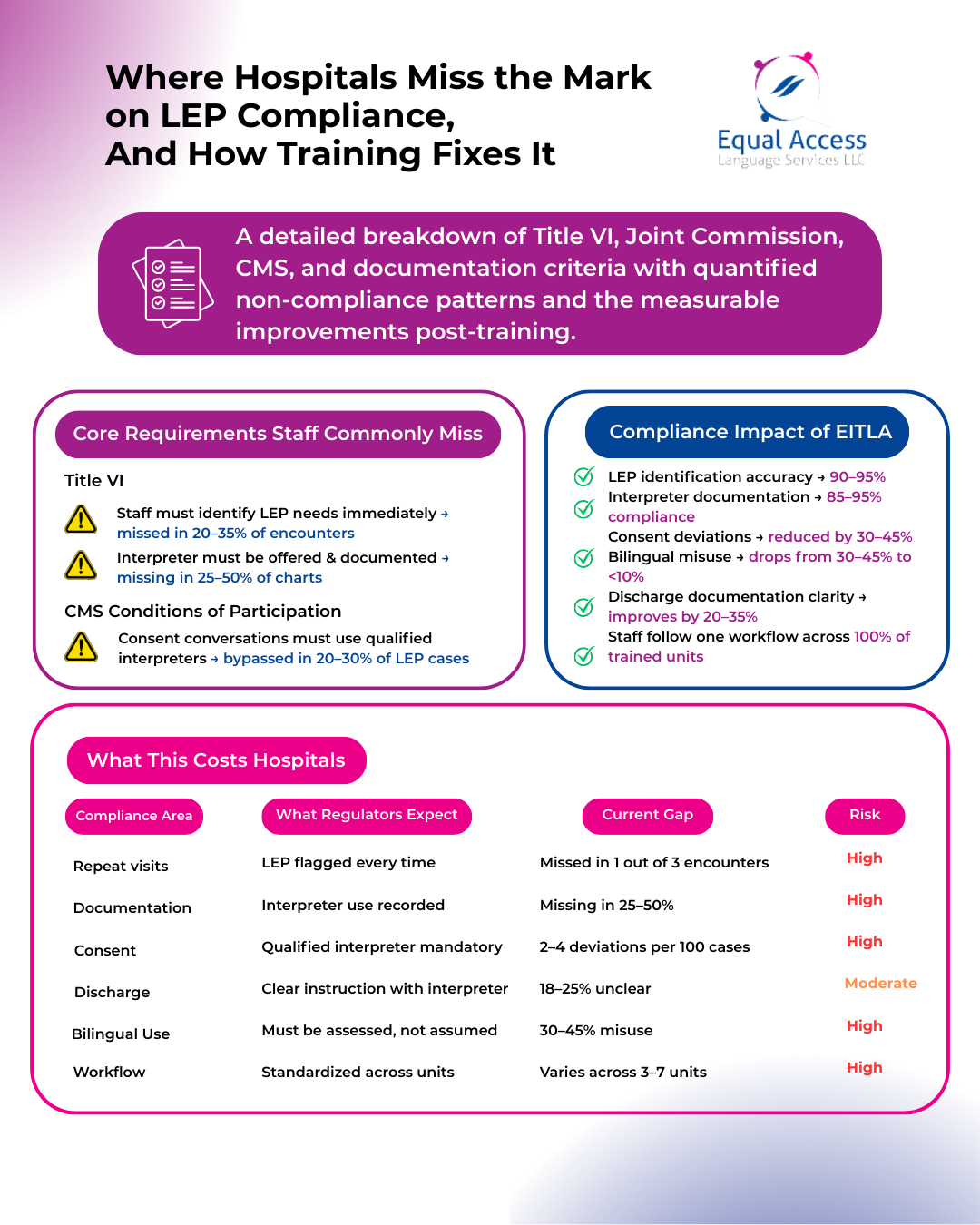
This one-pager helps you identify where compliance breaks down most often in LEP encounters. It maps regulatory expectations against real workflows and shows how missed steps create risk across consent, documentation, and discharge. A clear guide for compliance, quality, and risk teams.
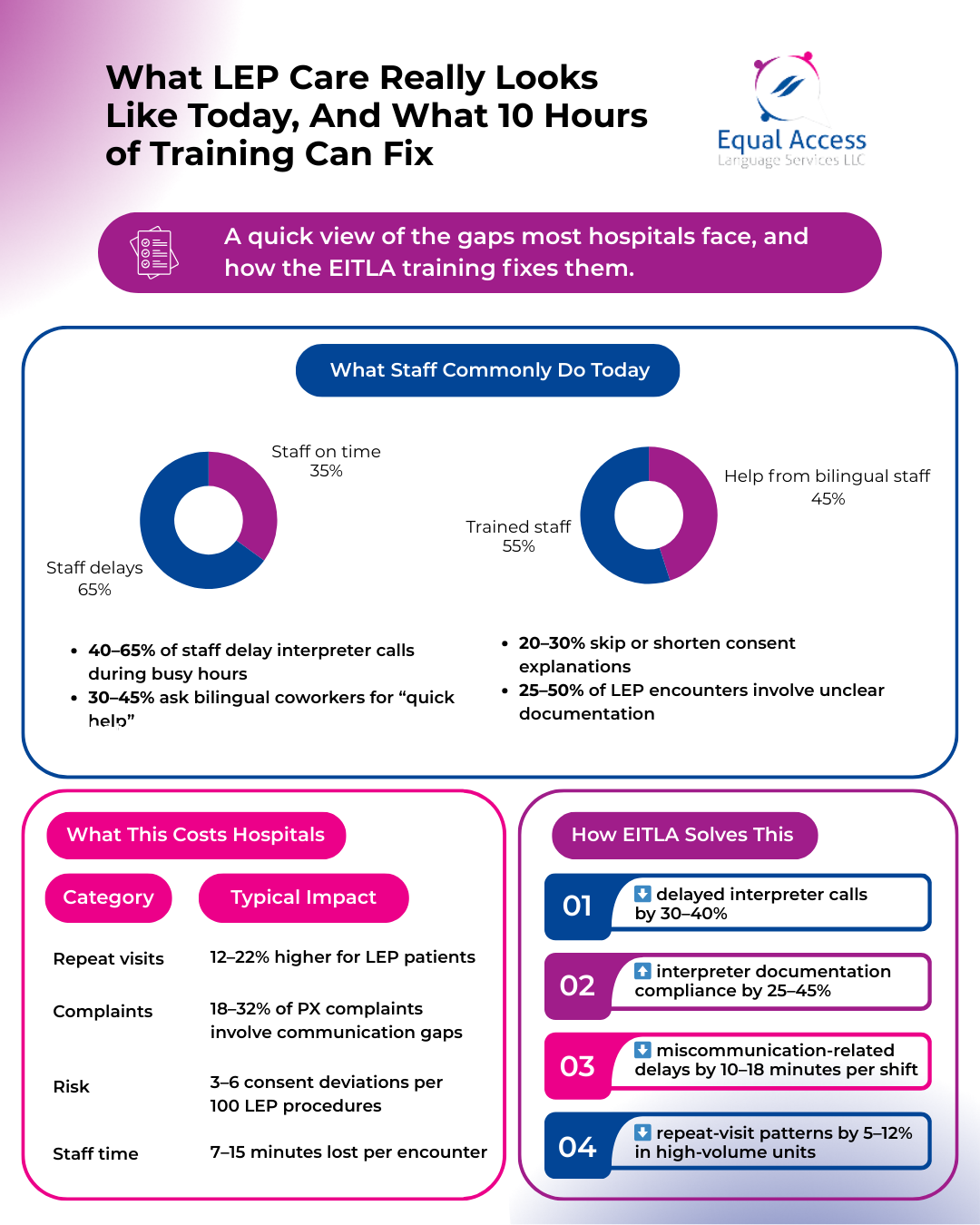
This one-pager helps you see the gap between policy and practice in LEP care. It highlights common workarounds staff use under pressure and explains how limited training can correct delays, documentation gaps, and repeat visits. A reality check for hospitals aiming to improve everyday compliance.
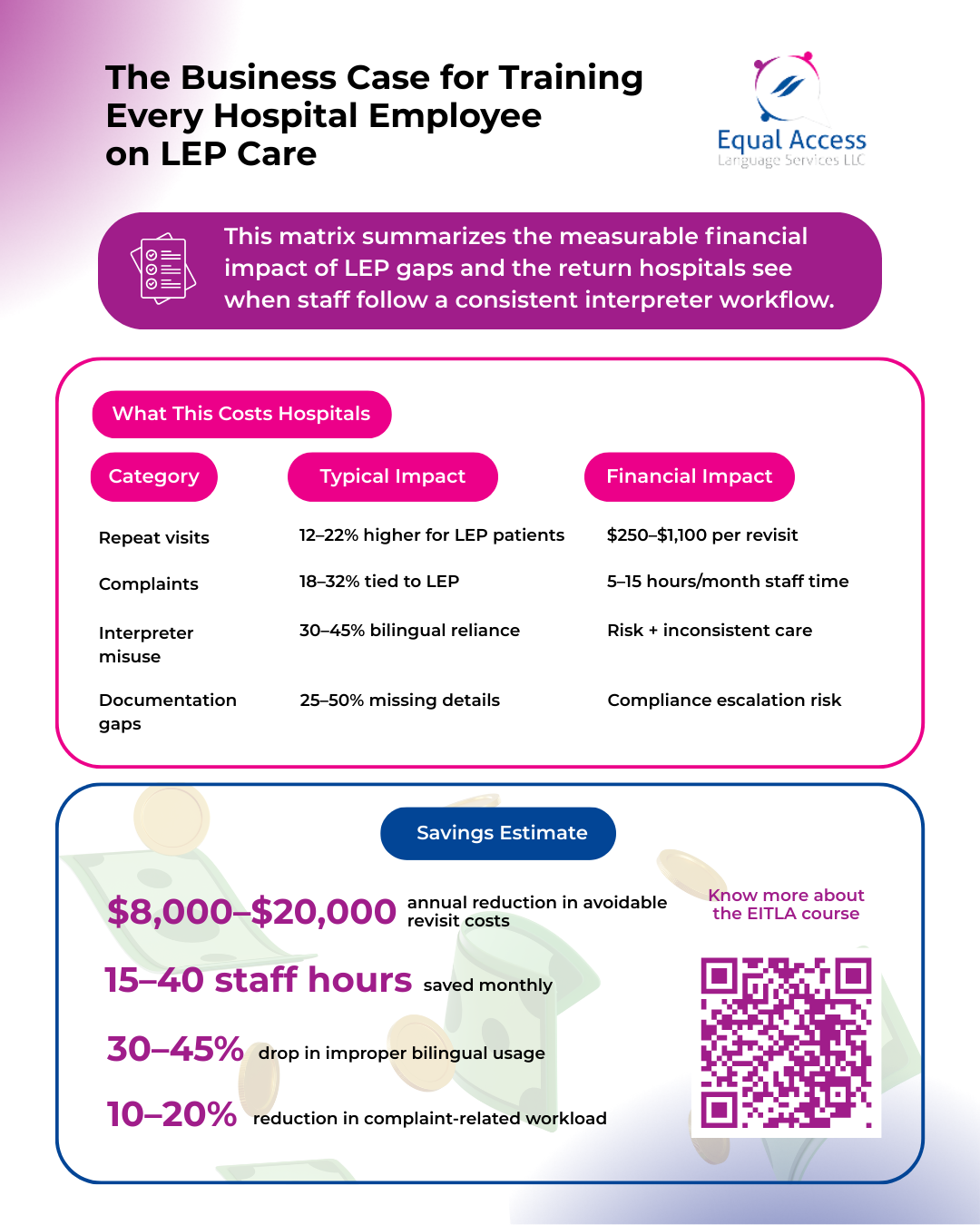
The Business Case for Training Every Hospital Employee on LEP Care
This one-pager helps you understand a hidden cost driver: inconsistent language access practices across staff roles. It shows how LEP gaps lead to repeat visits, complaints, and wasted time, and outlines how basic training reduces risk and cost. A data-driven tool for leaders making operational and financial decisions.
Implications of Family Members Translating for Patients
This one-pager helps you address a common misconception: that family members can safely interpret in healthcare settings. It explains why this practice risks accuracy, ethics, and privacy, and clarifies when and why qualified interpreters are required. A practical reference for clinicians and administrators facing real-time language access decisions.
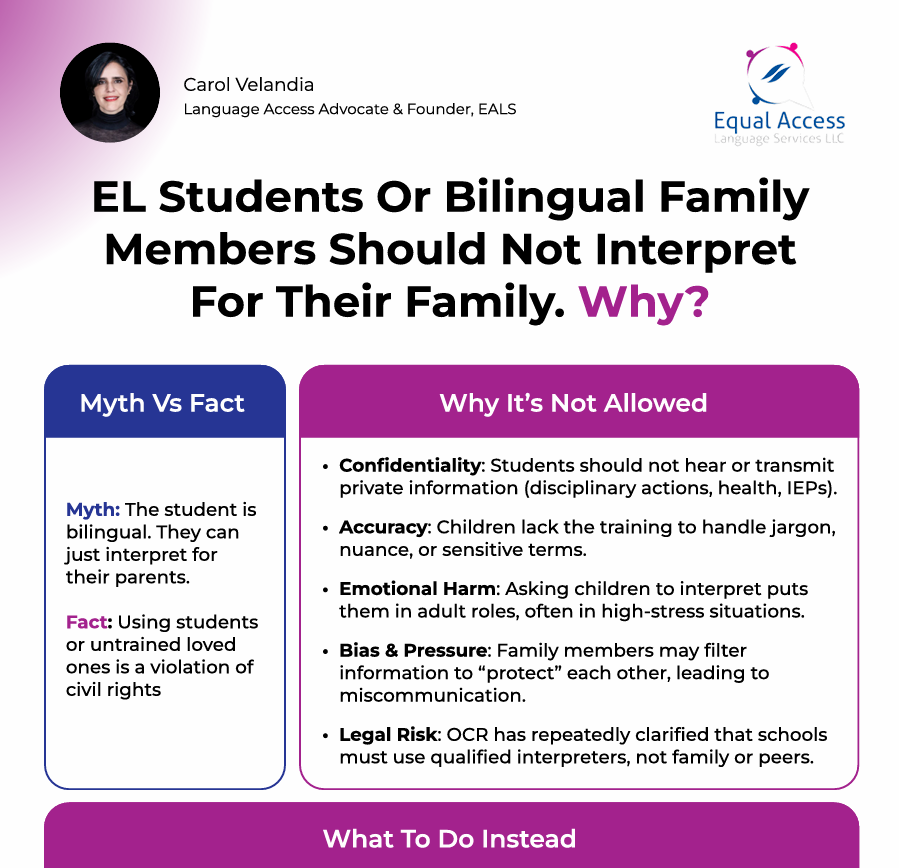
EL Students or Bilingual Family Members Should Not Interpret For Their Family. Why?
This one-pager helps you address a common misconception: that bilingual students or family members can “fill in” as interpreters. It explains why that practice is unethical, unsafe, and unlawful, and provides clear alternatives, like requesting trained interpreters in advance. A ready-to-share tool for educators and administrators who need clarity on best practice.
Quick Guide to Language-Access Laws in Education (and How to Use Them)
A concise reference to the federal and state laws that guarantee language access. This guide equips interpreters with the legal foundation to advocate for prep time, accuracy, and the right to qualified interpretation. Use it in conversations with administrators to demonstrate that language services are not optional but civil rights requirements.

.svg)



.webp)
.webp)
%20(2).webp)